Sweden's App-Based Gambling Landscape: Slot Mechanics and Live Dealer Compliance Intersections
Carlo Powell · Nov 1, 2026

Sweden's App-Based Gambling Landscape: Slot Mechanics and Live Dealer Compliance Intersections
Sweden maintains a structured licensing system for mobile gambling applications where operators must align slot mechanics with live dealer protocols under the oversight of Spelinspektionen, and those who've examined the framework note how these elements intersect through mandatory technical standards and player protection measures. Data from regulatory filings show that licensed apps incorporate random number generators for slots while live dealer streams require real-time verification systems, creating unified compliance pathways that developers address through integrated software architectures.
Regulatory Foundations Guiding Mobile Platforms
Swedish legislation requires all licensed operators to obtain approval for both game types before deployment, and figures from government reports indicate that applications submitted after 2023 must demonstrate compatibility with updated technical specifications that cover everything from payout percentages in slots to camera angles in live dealer environments. Observers note that these rules emerged from earlier reforms aimed at curbing unlicensed activity, resulting in a consolidated market where only verified platforms can offer combined access to mechanical and human-led games.
Operators navigate these requirements by submitting detailed documentation that outlines how slot algorithms interface with live dealer authentication modules, while compliance teams verify that no single feature violates age verification or transaction monitoring protocols. Research indicates that successful submissions often include simulation data demonstrating seamless transitions between game modes without triggering additional regulatory flags.
Slot Mechanics Within Licensed Applications
Slot implementations in Swedish apps follow strict randomness criteria enforced through certified testing laboratories, and experts point out that each reel configuration must undergo independent audits before release. These mechanics integrate with broader platform systems that track player behavior across sessions, allowing operators to maintain records required for responsible gaming interventions. Developers frequently employ modular designs that permit updates to volatility settings or bonus features while preserving core compliance layers.
Applications must also display clear information about return-to-player rates directly within the interface, and data collected by oversight bodies reveals consistent adherence across hundreds of approved titles. Those managing app ecosystems often coordinate with third-party certifiers to ensure that progressive jackpot systems do not conflict with live dealer payout structures when both appear in the same user journey.
Live Dealer Standards and Integration Points
Live dealer offerings demand continuous streaming capabilities paired with secure data transmission protocols, and studies from European regulatory collaborations highlight how Swedish rules emphasize dealer identification alongside game outcome logging. Platforms achieve this by embedding compliance checkpoints that activate whenever users switch from automated slots to staffed tables, preventing unauthorized access or incomplete verification sequences.
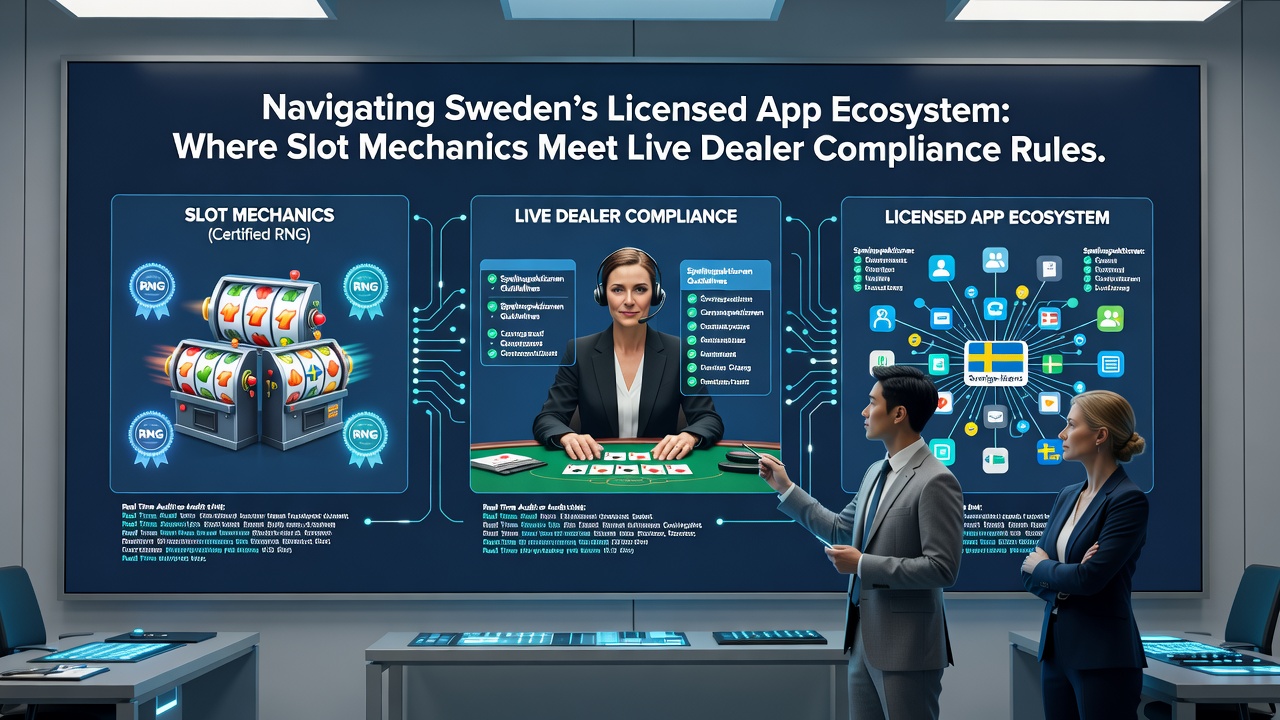
November 2026 marks the scheduled rollout of enhanced multi-device synchronization mandates, which will require apps to maintain identical compliance states across smartphones and tablets during live sessions. Operators preparing for this shift have already begun testing unified logging systems that capture both slot spin histories and dealer interaction timestamps in single audit trails.
Navigating Combined Compliance Challenges
Developers address overlapping rules by creating centralized dashboards that monitor slot performance metrics alongside live dealer stream quality indicators, and reports from industry associations show that this approach reduces duplicate reporting efforts. Applications must handle cross-feature restrictions such as deposit limits that apply uniformly regardless of game type, ensuring that users encounter consistent safeguards throughout their experience.
Those examining operational case studies find that platforms succeeding in this space typically invest in API connections linking game servers directly to regulatory reporting endpoints, which streamlines data submission while minimizing manual oversight. External verification from sources like the Spelinspektionen annual compliance review confirms that integrated systems correlate with fewer enforcement actions compared to fragmented implementations.
Payment processing layers add another dimension, since transaction records must reconcile slot wagers with live dealer tips or side bets under the same transparency standards. Analysts observe that licensed apps increasingly rely on blockchain-assisted ledgers for these reconciliations, though adoption remains tied to specific operator licenses rather than universal mandates.
Conclusion
Sweden's licensed app ecosystem demonstrates how slot mechanics and live dealer requirements converge through shared technical and reporting obligations, with ongoing developments scheduled for November 2026 further refining these connections. Organizations tracking these patterns reference data from bodies such as the Australian Gaming Association research reports to benchmark their own approaches against international examples. The resulting environment prioritizes verifiable integration points that support both innovation and regulatory adherence across mobile platforms.